








 RU
RU  EN
EN  ES
ES  PT
PT  FR
FR Walk into any supermarket or restaurant today, and you’ll see them everywhere: plastic bags. Hundreds of billions of them are used each year, most for just a few minutes before being thrown away. They don’t disappear—they break down into tiny particles that linger in our oceans, soil, and food chain for centuries.
For retailers and food service businesses, this poses a real challenge. You need packaging that works—that carries products safely, looks good, and keeps costs in check. But increasingly, customers and regulators are asking for something more.
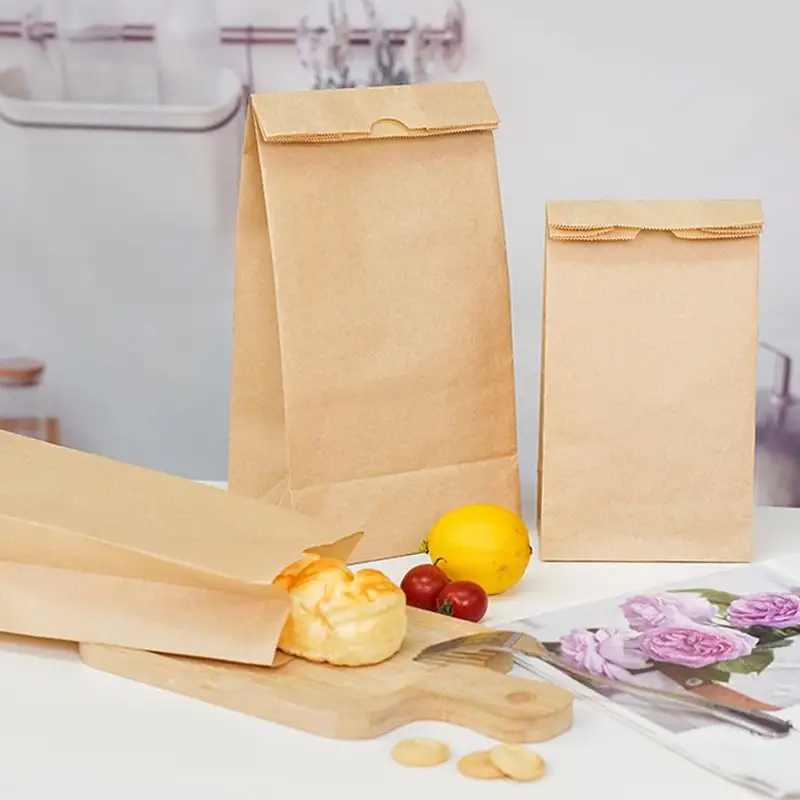
At Nanwang, we’ve spent over a decade finding a better way. Founded in 2010, we’re the first listed company in China’s экологичный бумажный пакет industry (Stock Code: 301355). We make custom kraft paper bags that help restaurants and grocery stores move away from plastic without compromising on performance or brand appeal.
What Makes Paper Different
Paper starts with trees—not oil. Sourced from responsibly managed forests, it’s a resource that can regrow. When a paper bag has served its purpose, it doesn’t stick around for hundreds of years. In the right conditions, it breaks down naturally within months, returning to the earth without leaving behind microplastics.
And because paper recycling infrastructure already exists almost everywhere, these bags can be turned into new paper products instead of ending up in landfills. Europe recycles 74% of its paper packaging—a rate plastics can only dream of.
The numbers tell the story, too. When Visy compared paper cushioning to plastic bubble wrap, they found the paper version generated 34% lower carbon emissions, used 73% less energy, and consumed 39% less water over its lifetime—based on a third-party reviewed life cycle assessment.
Paper That Performs
Now, you might be thinking: that’s fine for lightweight items, but what about heavy groceries or greasy takeout? Fair question.
Today’s kraft paper bags are nothing like the flimsy sacks of decades past. With over 400 sets of internationally advanced production equipment and more than 100 inspection instruments, our bags at Nanwang are engineered for real-world demands. Total assets exceeding USD 350 million back our commitment to quality.
For the messy stuff—think fried chicken or fresh produce—we’ve moved beyond the old reliance on PFAS chemicals. New treatments keep oil and moisture at bay without the environmental baggage. And by engineering paper fibers more intelligently, we’re using less material while maintaining strength, which means lighter shipments and fewer trucks on the road.
Innovations That Matter
Some of the recent advances in paper packaging genuinely surprise people.
Take bread bags, for example. For years, those little plastic windows made recycling nearly impossible. Now, nano-coating technologies make paper transparent without plastic. In Europe alone, switching bread bags to paper-based solutions could eliminate hundreds of thousands of tonnes of plastic waste every year.
Or consider barrier protection. Paper can now be engineered to keep oxygen and moisture out as effectively as plastic or aluminum—extending shelf life while remaining fully recyclable.
And handles? Paper handles that can carry up to 50 kilograms are already used today for bulk pet food and cold-chain logistics. Not prototypes—real solutions, working right now.
Proof That It Works
The best part? These aren’t theoretical possibilities. They’re delivering results today.
In the UK, frozen food retailer Iceland switched their chicken dippers line to functional barrier paper and achieved an 80% plastic reduction. Their Бумажный пакет пищевого класса team noted that the paper runs efficiently on their existing machinery—no costly equipment upgrades required. The solution, developed in partnership with Mondi, demonstrates that sustainability and operational efficiency can go hand in hand.
Across the food industry, similar transitions are underway—from produce departments switching to paper bags for fruits and vegetables, to restaurants replacing plastic takeout bags with durable kraft alternatives. Each swap represents measurable plastic waste avoided.
Why Businesses Are Making the Switch
It’s not just about environmentalism. There’s a solid business case.
Research consistently shows that a majority of consumers prefer brands that use sustainable packaging. Paper’s natural look and feel communicates that commitment authentically—no greenwashing required. And with custom printing using non-toxic, water-based inks, your brand identity doesn’t have to take a back seat.
Regulations are also tightening. Single-use plastic bans are spreading across continents. Companies that transition now are future-proofing their operations rather than scrambling later.
And the cost gap? It’s narrowing every year as technology improves and production scales up.
Who We Are
Nanwang started in 2010 in Quanzhou, Fujian, with a simple idea: paper bags could replace plastic. Today, we’re the first listed company in China’s eco-friendly paper bag industry, serving over 300 global brands across more than 200 countries and regions.
Our product portfolio spans eco-friendly paper bags, food-grade paper packaging, non-woven bags, adhesive labels, and thermal paper receipts. We’ve built subsidiaries in Fujian, Shanghai, Guangdong, Anhui, Hebei, Hubei, Canada, and Indonesia—positioning us to serve customers wherever they are.
Quality runs through everything we do. We’re certified to ISO 9001, ISO 14001, ISO 45001, ISO 22000, FSC-COC, BRCGS (Grade A+), and Sedex (4P). These aren’t just badges—they’re how we work every day.
Our technical R&D team invests over USD 7 million annually, resulting in 94 authorized domestic patents (including 11 invention patents) and 5 international patents. We’ve developed 14 industry-leading core technologies, from automated handle attachment to paper bag anti-permeation.
We’ve been recognized as a National High-Tech Enterprise, a National Service-Oriented Manufacturing Demonstration Enterprise, and a Fujian Provincial “Specialized, Sophisticated, Distinctive & Innovative” SME. For seven consecutive years, we’ve ranked among China’s Top 100 Packaging and Printing Enterprises.
Perhaps most importantly, we’ve helped draft 11 national and industry standards for paper packaging—including standards for paper cups, paper straws, and food contact materials. When the industry moves forward, we’re helping shape the direction.
Looking Ahead
Here’s what we know: an 80% reduction in plastic for frozen food. Handles that carry 50kg. Barrier protection that rivals plastic. These aren’t distant goals—they’re already happening.
The transition from plastic to paper is underway. For restaurants and retailers, it’s an opportunity to reduce waste, meet customer expectations, and build a brand that stands for something real.
At Nanwang paper bag manufacturers in china, we’re guided by a simple mission: “Greener Packing, Better World.” We believe that packaging can serve human needs without compromising planetary health.