








 ES
ES  EN
EN  PT
PT  FR
FR  RU
RU Walk into any retail store today, and you’ll notice something different about the bags at checkout. They’re stronger than they used to be. Some are surprisingly soft to the touch. Others have a transparency that lets you see what’s inside—without a plastic window. And when you’re done with them, they don’t sit in a landfill for centuries.
This isn’t accidental. It’s the result of years of material science innovation aimed at solving one of retail’s biggest challenges: how to package products in a way that performs as well as plastic, but doesn’t harm the planet.
For eco-conscious brands, the stakes are high. Consumers increasingly choose companies based on environmental values. Regulations are tightening. And the technology available today offers solutions that were impossible just a few years ago.
At Fujian Nanwang Environment Protection Sci-Tech Co., Ltd., we’ve been at the forefront of this shift since 2010. As the first listed company in China’s bolsa de papel ecológica industry (Stock Code: 301355), we’ve seen firsthand how biodegradable paper packaging has evolved—and where it’s headed next.
The Problem Biodegradable Paper Solves
The numbers are sobering. Camm Solutions cites statistics from The World Counts indicating that the recycling rate for plastic bags is only about 1%, meaning that an alarming 99% end up either in incinerators or polluting our environment. These materials don’t disappear. They break down into microplastics that persist in oceans, soil, and even the air we breathe for centuries.
Traditional plastic packaging also comes with a carbon footprint problem. The production of petroleum-based materials generates significant greenhouse gas emissions, and the end-of-life options are limited—most plastic ends up in landfills or the environment, not recycling streams.
Biodegradable paper packaging addresses both issues. Made from renewable wood fibers sourced from responsibly managed forests, it can break down naturally in the right conditions within months, returning to the earth without leaving harmful residues. And because paper recycling infrastructure already exists in most markets, these materials have a clear path to circularity that plastics often lack.
What Makes Today’s Biodegradable Paper Different
If you’re thinking of the flimsy paper bags of decades past, it’s time to update your mental image. Today’s biodegradable paper packaging is engineered for performance that rivals—and in some cases exceeds—plastic.
- Strength That Carries Real Weight
Modern kraft paper can handle significant loads. At Nanwang, our bags are engineered through rigorous testing to ensure they won’t fail with heavy items. This isn’t just about avoiding customer frustration—it’s about building trust in paper as a viable alternative.
- Moisture and Oil Resistance Without the Chemicals
One of the biggest historical challenges with paper packaging was its performance with wet or greasy products. The solution was often PFAS (per- and polyfluoroalkyl substances)—chemicals that come with their own environmental concerns. Today, new PFAS-free treatments keep oil and moisture at bay without the environmental baggage. This means fried chicken stays crispy in the bag, and fresh produce doesn’t soak through before reaching the kitchen.
- Weight Efficiency That Reduces Carbon Footprint
By engineering paper fibers more intelligently, manufacturers are using less material while maintaining strength. This approach—sometimes called “lightweighting”—means lighter shipments and fewer trucks on the road, reducing the carbon footprint of packaging before it even reaches the customer.
- Transparency Without Plastic
Perhaps one of the most exciting innovations is transparent paper. For years, plastic windows in bread bags and other retail packaging were considered essential for product visibility. But those windows made recycling nearly impossible.
Now, companies like delfort have developed nano-coating technologies that make paper transparent without plastic. Their thinwrap™ product offers the visibility customers want while remaining fully biodegradable and recyclable. Certified by the Forest Stewardship Council (FSC) and the Programme for the Endorsement of Forest Certification (PEFC), it represents a genuine breakthrough for categories like bakery, fresh produce, and e-commerce packaging.
- Recycled Air Pillows for Shipping Protection
For shipping protection, Camm Solutions has developed recycled air pillows made from paper with a biodegradable coating. These pillows provide cushioning for products during transit while being fully recyclable in the paper stream. Notably, they can support loads of up to 50 kilograms while maintaining their shape and lightweight properties—making them a genuine alternative to plastic bubble wrap for e-commerce operations.
- Bio-Based Materials Beyond Paper
The definition of “biodegradable packaging” is expanding beyond traditional paper. DHL predicts that 2026 will see increased adoption of bio-based materials such as polylactic acid (PLA)—a compostable plastic derived from cornstarch—alongside mushroom-based packaging cultivated from mycelium.
These materials can decompose in composting conditions within months, offering enhanced environmental profiles compared to petroleum-based plastics. And they’re no longer just for big-budget brands. As Leendert Van Delft, VP Global Sales Programmes at DHL, notes: “Today, SMEs can source them through specialised packaging suppliers, co-packing partners or even in ready-to-use formats designed for e-commerce.”
How Eco-Conscious Brands Are Using Biodegradable Paper
The shift to biodegradable paper packaging isn’t theoretical—it’s happening across retail categories.
- E-Commerce Giants Leading the Way
Companies like Amazon and Flipkart are increasingly adopting paper-based solutions for their packaging needs. Bambrew, a sustainable packaging provider that works with these e-commerce platforms, has developed paper-based mailer bags, courier sleeves, and packaging tape to replace plastic alternatives. The company has built a client base of over 100 businesses, demonstrating that biodegradable solutions can scale to meet the demands of high-volume operations.
- Food and Beverage Brands Making the Switch
The food and beverage sector is one of the primary drivers of biodegradable packaging adoption. Restaurants and food retailers are turning to compostable trays, cups, wraps, and pouches to meet both regulatory requirements and consumer expectations.
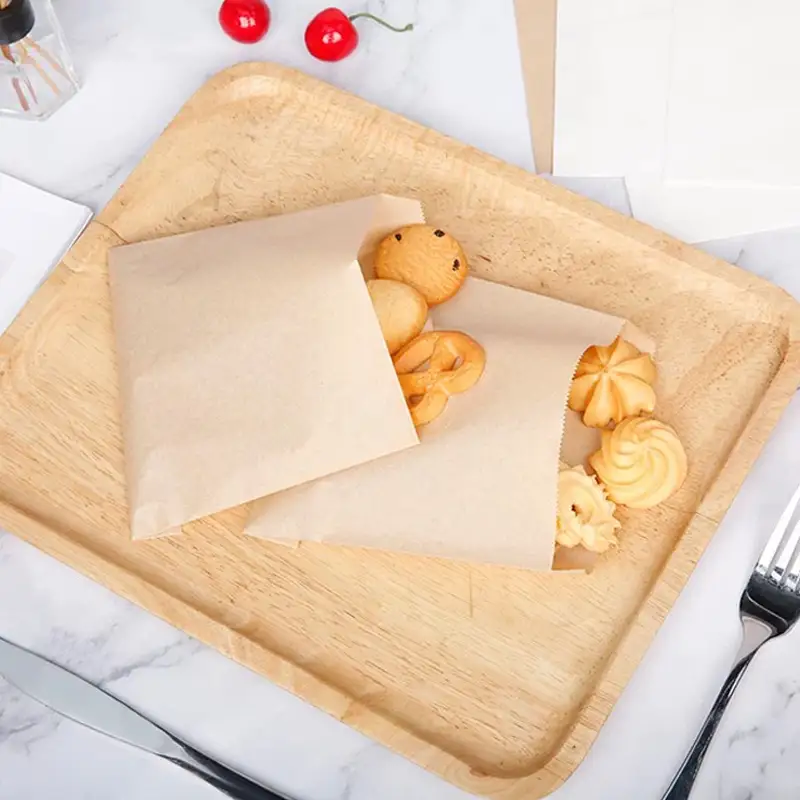
At Nanwang, our food-grade paper packaging is produced using water-based inks and food-grade materials. This ensures that Bolsas de papel para reparto de alimentos doesn’t just meet environmental standards—it also maintains the safety and hygiene required for direct food contact.
Retail Brands Using Packaging as Brand Communication
For eco-conscious brands, packaging isn’t just protection—it’s a statement of values. The natural texture of kraft paper communicates authenticity and care in ways that plastic cannot. Custom printing using non-toxic, water-based inks allows brands to reinforce their identity while staying true to sustainability commitments.
When customers carry a branded paper bag through the neighborhood, they’re extending the brand’s reach and signaling their own environmental values. A single printed bag can generate dozens of passive impressions daily—and each impression reinforces the brand’s commitment to sustainability.
- The Market Reality: Growth and Opportunity
The numbers confirm what many retailers are already experiencing: biodegradable paper packaging is a growth market.
The global paper bags market is estimated to be valued at USD 6.73 billion in 2026 and is projected to reach USD 9.75 billion by 2033, growing at a CAGR of 5.5% during the forecast period. This growth is driven by several factors.
- Regulatory Pressure
Government bans on single-use plastics are accelerating the shift. Dubai implemented the final phase of its single-use plastics ban on January 1, 2026, prohibiting plastic plates, cups, lids, and cutlery, following earlier phases in 2024 and 2025. The Gambia has launched a National Action Plan targeting an 86% reduction in plastic waste over the next decade. India’s nationwide ban on select single-use plastics, implemented in July 2022, continues to push the market toward sustainable alternatives.
These regulations aren’t abstract policy debates—they’re creating real market demand for biodegradable alternatives.
- Consumer Preferences
Research consistently shows that a majority of consumers prefer brands that use sustainable packaging. As environmental awareness grows, particularly among younger demographics, this preference translates directly into purchasing decisions.
- Retailer Commitments
Major retailers are evaluating suppliers based on recycled content and recyclability rates. Suppliers that fail to meet sustainability criteria risk losing shelf space. For brands selling through these retailers, the pressure to adopt sustainable packaging is becoming unavoidable.
The Technology Challenge: What Still Needs Work
Despite the advances, biodegradable paper packaging isn’t perfect. Understanding the limitations helps brands make informed decisions.
- Barrier Performance
Biodegradable materials can have lower barrier properties than plastic, which can be a challenge for products requiring extended shelf life or protection from moisture. However, innovations in bio-based coatings and barrier films are rapidly closing this gap.
- Cost Considerations
Biodegradable materials often cost more than conventional plastics—typically 10-15% more in some markets. The gap is narrowing as technology improves and production scales up, but it remains a consideration for price-sensitive categories.
- Infrastructure Gaps
Perhaps the biggest challenge is that biodegradable packaging requires proper disposal infrastructure to realize its environmental benefits. Many regions lack industrial composting facilities, and consumer confusion about what “biodegradable,” “compostable,” and “recyclable” mean can lead to incorrect sorting.
This is why companies like Danone are using smart packaging with QR codes—their How2Recycle Plus program provides localized recycling information to help consumers dispose of packaging correctly.
What’s Next: Trends to Watch
Looking ahead, several trends will shape the future of biodegradable paper packaging.
- Smart Packaging
DHL predicts that 2026 will see growth in “smart packaging”—packaging that helps customers understand how to responsibly dispose of materials through QR codes and NFC tags. This addresses one of the key challenges with biodegradable materials: ensuring they actually reach the right end-of-life pathway.
- Circular Packaging Models
Circularity is gaining traction as manufacturers work to extend the lifespan of packaging materials. Smurfit Westrock’s closed-loop manufacturing model, for example, uses renewable raw materials to produce paper-based packaging that is 100% recyclable, renewable, and biodegradable. The company has developed paper-based alternatives including the PETCollar® for bottle multipacks.
- Global Expansion
The Asia Pacific region is projected to be a key growth market for paper-based packaging, driven by strict regulations on single-use plastics, rising consumer awareness, and the expansion of e-commerce and food delivery services. In India alone, the sustainable packaging market is estimated to reach significant valuations over the coming decade.
How Nanwang Is Contributing to the Innovation
At Nanwang, we’re actively involved in advancing biodegradable paper packaging. Our products are made from high-strength kraft paper using water-based inks and water-based adhesives—materials that are completely biodegradable.
We’ve established manufacturing facilities in Fujian, Shanghai, Guangdong, Anhui, Hebei, Hubei, Canada, and Indonesia. This global footprint allows us to serve eco-conscious brands wherever they operate.
Our technical R&D team invests heavily in innovation, resulting in numerous authorized domestic and international patents. We’ve developed industry-leading core technologies, from automated handle attachment to paper bag anti-permeation. Welcome to Contacto.
Perhaps most importantly, we’ve contributed to drafting multiple national and industry standards for paper packaging—including standards for paper cups, paper straws, and food contact materials. When the industry moves forward, we’re helping shape the direction.
Looking Ahead
The transition to biodegradable paper packaging isn’t just about replacing one material with another. It’s about rethinking how packaging fits into a circular economy—one where materials are renewable, products are designed for their end-of-life, and waste is eliminated.
The technology is here. The market is ready. And for eco-conscious brands, the opportunity is clear: adopt biodegradable paper packaging, and you’re not just reducing plastic waste—you’re building a brand that stands for something real.
At Nanwang proveedor de envases de papel, we’re guided by a simple mission: “Greener Packing, Better World.” We believe that packaging can serve human needs without compromising planetary health. Every biodegradable paper bag we make is a small step toward that goal.