








 PT
PT  EN
EN  ES
ES  FR
FR  RU
RU 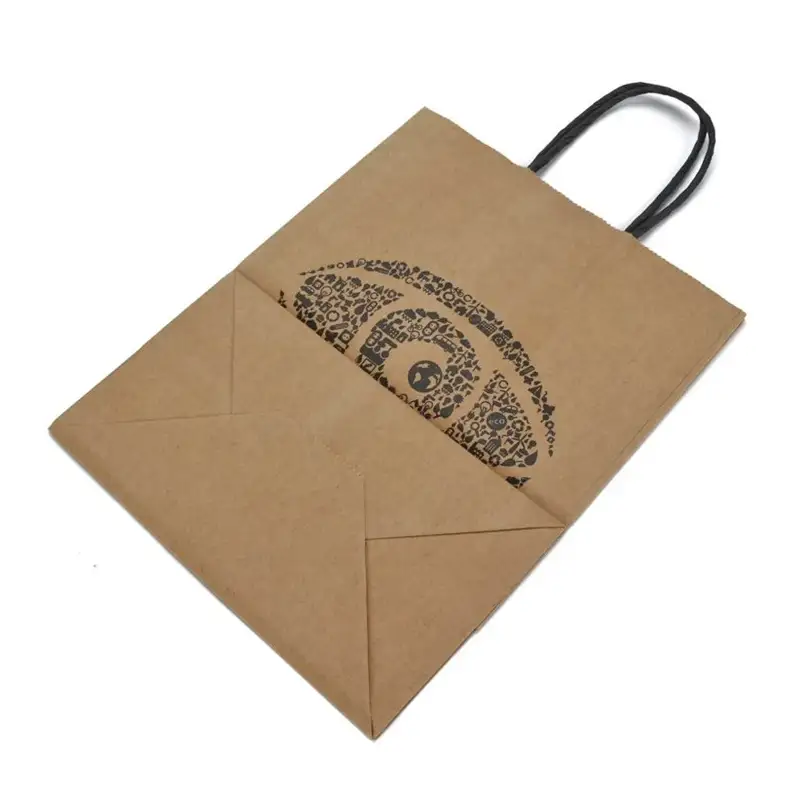
Abstract
An inquiry into the structural mechanics of common retail packaging reveals the sophisticated engineering principles underlying seemingly simple objects. This analysis deconstructs the twisted paper handle, a ubiquitous component of modern paper bags, to elucidate the sources of its remarkable load-bearing capacity, which can reach 8-10 kilograms. Through a methodical examination, this document explores what I found inside twisted paper handles, focusing on three core areas: the role of torsion in augmenting the tensile strength of Kraft paper fibers, the composite nature of the handle's core structure, and the mechanical design of its anchor points. The investigation reveals that the handle is not a monolithic strip of paper but a multi-ply, adhesively bonded cord. Its strength is a function of material science, geometric transformation, and strategic reinforcement. This exploration provides a deeper appreciation for the design intelligence embedded in everyday sustainable packaging, contextualizing its function within the broader imperatives of environmental responsibility and material efficiency in the year 2025. The findings underscore the value of such designs as viable, eco-friendly alternatives to petroleum-based plastics in the retail and food service industries.
Principais conclusões
- Torsion transforms a weak paper strip into a strong, rope-like cord by aligning and tensioning fibers.
- A hidden inner ply of paper, bonded with adhesive, provides critical composite reinforcement.
- Discovering what I found inside twisted paper handles shows how simple materials create robust structures.
- A glued reinforcement patch distributes load stress, preventing the bag from tearing at the anchor point.
- This clever engineering makes twisted paper handles a strong, reliable, and sustainable packaging choice.
- Advanced automation ensures consistent quality and strength in every mass-produced paper handle.
Índice
- A Moment of Skepticism: The Genesis of a Packaging Investigation
- Secret #1: The Alchemy of Torsion – Transforming Paper into Rope
- Secret #2: The Composite Core – Deconstructing the Handle's Inner Structure
- Secret #3: The Anchor Point – Engineering a Connection for an 8-10kg Load
- Perguntas frequentes (FAQ)
- The Hidden Genius of the Mundane
- Referências
A Moment of Skepticism: The Genesis of a Packaging Investigation
It began with a moment of doubt, a feeling I am sure many of us have experienced. I was leaving the grocery store, my arms laden with two large paper bags. Each was filled to the brim—a carton of milk, a heavy bag of apples, canned goods, a dense loaf of bread. The weight was substantial. My fingers curled around the two thin, cord-like paper handles, and a familiar thought surfaced: "Is this really going to hold?" The handles, each no thicker than a pencil, felt taut under the strain. They seemed so fragile, so… papery. How could these simple, twisted pieces of brown paper possibly support a load that felt close to 10 kilograms without snapping?
This question, born of mundane experience, lingered. As a society, we are surrounded by objects whose functionality we take for granted. The paper shopping bag is a prime example. Its existence is so ordinary that we rarely pause to consider the thought that went into its design. Yet, my skepticism about the handle’s integrity sparked a deeper curiosity. It was not enough to know that it worked; I wanted to understand how it worked. What engineering principles were at play? What material science was I holding between my fingers? That afternoon, I decided to find out. I took an identical, unused paper bag, a pair of sharp scissors, and began a small investigation. My goal was simple: to uncover what I found inside twisted paper handles that gives them their surprising strength.
This exploration is a journey into the heart of an everyday object. It is an attempt to peel back the layers of the familiar to reveal the unexpected sophistication within. We will dissect the handle, not just physically but intellectually, examining its structure from the microscopic level of its fibers to the macroscopic level of its connection to the bag. In doing so, we will uncover the three key secrets that allow this humble component to perform its task so reliably. It is a story of how basic materials, when manipulated with clever engineering, can achieve extraordinary performance.
Before we begin the dissection, it is helpful to contextualize the different types of handles commonly used in the paper bag industry. Their characteristics differ significantly in terms of performance, cost, and aesthetic appeal, which explains why the twisted paper handle occupies such a popular middle ground.
Table 1: Comparative Analysis of Common Paper Bag Handles
| Caraterística | Twisted Paper Handle | Flat Paper Handle | Rope/Textile Handle |
|---|---|---|---|
| Typical Load Capacity | Moderate to High (up to 10 kg) | Low to Moderate (up to 5 kg) | High to Very High (10+ kg) |
| Material Cost | Low | Very Low | High |
| Production Speed | High (Fully Automated) | Very High (Fully Automated) | Moderate (Often requires manual steps) |
| Consumer Feel | Comfortable, Sturdy | Basic, Functional | Premium, Luxurious |
| Recyclability | Excellent (Monomaterial) | Excellent (Monomaterial) | Varies (May contain plastic/metal parts) |
| Primary Application | Retail, Takeout, Groceries | Small Purchases, Pharmacy, Bakery | Luxury Retail, Gift Bags, Boutiques |
This table immediately highlights the balanced profile of the twisted paper handle. It offers a significant upgrade in strength over the flat handle without incurring the high cost or complex manufacturing of textile ropes. This balance of performance and economy is a direct result of the engineering secrets we are about to explore.
Secret #1: The Alchemy of Torsion – Transforming Paper into Rope
The first and most fundamental secret to the handle's strength lies in its twisted form. When I first examined the handle, its cord-like appearance was obvious. But the true significance of this shape only became clear when I carefully began to untwist it. The process was slow; the paper fought to retain its coiled memory. As I worked, the dense, firm cord gradually loosened, unspooling into a surprisingly wide, flat strip of ordinary Kraft paper. It was flimsy. Holding the now-flat strip, which was about two centimeters wide, I could tear it with minimal effort. Yet, just moments before, in its twisted state, it had felt incredibly robust. This simple act of transformation was profound. It demonstrated that the strength was not inherent to the paper itself but was imparted by the geometry of the twist.
This is the magic of torsion. The principle is ancient, mirroring the way our ancestors spun plant fibers into thread or twisted animal sinew into bowstrings. A single fiber is weak, but when thousands are twisted together, they form a rope capable of immense tension. The twisted paper handle operates on the exact same mechanical principle, albeit with paper fibers instead of hemp or cotton.
The Material Science of Kraft Paper Fibers
To appreciate this transformation, we must first understand the material itself: Kraft paper. The term "Kraft" is German for "strength," a fitting name for a material developed in the late 19th century specifically for its superior durability. It is produced through the Kraft process, a chemical pulping method that removes most of the lignin from wood chips. Lignin is the natural glue that binds cellulose fibers together in a tree, but it also makes paper brittle and weak. The Kraft process selectively removes lignin while leaving the long, strong cellulose fibers largely intact (Smook, 2016).
Imagine these cellulose fibers as microscopic threads. In a standard sheet of paper, these fibers are mostly randomly oriented, forming a flat mat. While there are some bonds between them, the overall strength of the sheet in any given direction is limited. When you pull on a flat strip of this paper, the force is concentrated along a narrow line, and the failure occurs as individual fibers pull apart or tear. This is why the untwisted strip in my hand was so easy to rip. The force I applied was not resisted by the collective strength of all the fibers, only by the few that lay directly in the path of the tear.
Understanding Torsional Stress and Strain in Paper
Twisting changes everything. As the flat strip of Kraft paper is spun into a tight cord, a fascinating reorientation occurs at the microscopic level. The cellulose fibers are forced to align themselves more closely with the length of the cord, spiraling around the central axis. Think of the stripes on a candy cane. This helical alignment is the key.
When a load is applied to the twisted handle, the force is no longer pulling against a few fibers in a flat sheet. Instead, the tensile force is distributed along the helical paths of thousands of aligned fibers. The force attempts to pull the fibers straight, but to do so, it must work against two powerful resisting forces:
- Friction: The twisting process compacts the paper, dramatically increasing the surface area contact between fibers. This creates immense frictional force. As the handle is pulled, the fibers grip each other tightly, preventing them from sliding past one another.
- Tension: Each individual fiber is put under tension along its length. The collective tensile strength of these thousands of tiny, now-aligned threads is enormous compared to the tear strength of the original flat sheet (Koukoulas & Jordan, 2003).
A study on the mechanical properties of twisted paper yarns confirmed that the tensile strength and stiffness of the yarn increase significantly with the twist level, up to an optimal point (Moutinho et al., 2007). The twist effectively converts the paper's two-dimensional weakness into a one-dimensional strength, channeling the material's potential along the axis of the handle.
From Flat Strip to Strong Cord: A Step-by-Step Transformation
The manufacturing process that achieves this is a marvel of high-speed automation. A large roll of Kraft paper feeds a continuous strip into a machine. The strip is first lightly moistened to make it more pliable. Then, it is fed through a series of rollers and guides that begin to fold and spin it. The machine twists the paper strip at an incredibly high speed, applying a precise number of twists per centimeter to achieve the optimal balance of strength and flexibility. Immediately after twisting, the cord is often passed through a heating element which dries it rapidly, setting the twist and the internal stresses permanently. The result is a continuous, strong paper cord, which is then cut to length and prepared for the next stage of the process.
What I had done by hand, untwisting the handle, was to reverse this elegant industrial process. The resistance I felt was the stored mechanical energy from its creation. The flimsy strip I was left with was the raw material, a testament to the fact that the handle's strength is not just about what it is made of, but how its constituent parts are arranged in space. It is a triumph of structural engineering over raw material limitations.
Secret #2: The Composite Core – Deconstructing the Handle's Inner Structure
My initial discovery about torsion was satisfying, but it was not the end of the story. As I examined the twisted cord more closely, I noticed something odd. There seemed to be a subtle seam or line running along its length. My curiosity piqued, I decided to perform a more delicate operation. Instead of just untwisting, I took a sharp craft knife and carefully sliced the twisted cord lengthwise, trying to split it in half. What I found inside was the second, and perhaps most surprising, secret: the handle was not made from a single strip of paper.
It was a composite structure.
Inside the main outer twisted layer, I found another, smaller, more tightly twisted paper cord. In some handles I later examined from different sources, it was not a separate cord but a distinct inner ply—a second strip of paper that had been folded inside the first one before the twisting process began. The handle I was holding was essentially a paper rope made of two separate paper strands twisted together, or a single strip folded to create a two-ply structure before twisting.
This discovery fundamentally changed my understanding of the object. It was not just a twisted strip; it was an engineered composite material. The use of a multi-ply or multi-strand structure is another classic rope-making technique, designed to further enhance strength, durability, and resilience.
The Hidden Reinforcement: Analyzing the Inner Ply
The presence of this inner component is a masterstroke of efficient design. It serves several critical functions that a single-ply twisted cord could not achieve as effectively.
First, it increases the material density and cross-sectional area of the handle without simply making the initial paper strip thicker. A thicker paper would be stiffer, harder to twist, and more prone to cracking. By using two thinner, more flexible plies, manufacturers can build a handle that is both strong and pliable.
Second, the inner ply disrupts the path of potential failure. Imagine a microscopic tear starting on the surface of the handle. In a single-ply structure, that tear could potentially propagate straight through the material. In a composite structure, the tear would have to navigate a much more complex path. Its energy would be dissipated as it reached the boundary between the outer ply and the inner ply. The interface between the two layers, often bonded by a thin layer of adhesive, acts as a crack arrester. This is a principle used in advanced composite materials for aerospace and automotive applications, here applied ingeniously to simple paper.
Third, it improves the distribution of stress throughout the handle. When the handle is under load, the outer ply and inner ply work together. The outer ply takes a significant portion of the initial tensile stress, while the inner core provides stability, prevents the handle from collapsing inward (buckling), and shares part of the load. This co-operative action makes the entire structure more resilient to sudden shocks, like the bag being dropped or jerked.
The Role of Adhesives in Structural Integrity
As I carefully separated the two plies of the handle I had dissected, I could see and feel the faint residue of an adhesive. It was not a thick, gummy layer but a very thin, almost imperceptible bonding agent. In modern, high-speed paper bag manufacturing, these adhesives are typically starch-based or a type of polyvinyl acetate (PVA). They are chosen for their rapid setting times, strong bond with cellulose fibers, and, crucially, their non-toxic, often food-safe, and biodegradable properties (Frihart, 2009).
The adhesive performs a vital role in making the composite structure work. It ensures that the two plies act as a single, unified component rather than two separate strands that could slide against each other. By bonding the layers, the adhesive facilitates the transfer of shear stress between them. This means that when a force is applied, the plies cannot stretch independently; they are forced to stretch together, sharing the load efficiently. This adhesive bond turns two weak components into one strong composite, where the total strength is greater than the simple sum of its parts. The quality of this adhesive bond is a critical factor that distinguishes high-quality sacos de papel com pega torcida from inferior ones.
How Layering Distributes Weight and Prevents Failure
Think of the difference between a single, solid wooden plank and a piece of plywood. The solid plank is strong, but it can split easily along its grain. Plywood, made of multiple thin layers of wood (veneers) glued together with their grains oriented in different directions, is incredibly strong in all directions and highly resistant to splitting.
The two-ply twisted paper handle functions in a similar, albeit simpler, way. The two layers of paper, even if their own fiber orientations are random, create a laminated structure once they are twisted and bonded. The helical twisting of both plies means that stresses are distributed in a complex, three-dimensional spiral. The chance of a single weak point in the paper aligning perfectly through both plies is statistically very low. The structure has built-in redundancy. This layering is a simple, low-cost way to build a material that is far more reliable and forgiving than a single, thicker piece of paper would be. What I found inside twisted paper handles was not just paper; it was a carefully designed composite system, a testament to maximizing performance with minimal, sustainable materials.
To better understand the choice of Kraft paper for this application, it is useful to compare its properties to other common materials used for carrying bags and handles.
Table 2: Comparative Properties of Packaging Materials
| Property | Kraft Paper (Cellulose Fibers) | Polypropylene (Plastic) | Cotton (Natural Textile) |
|---|---|---|---|
| Fonte primária | Renewable (Managed Forests) | Non-renewable (Fossil Fuels) | Renewable (Agriculture) |
| Tensile Strength | Moderate (Significantly increased by twisting) | High | High |
| Biodegradability | High (Typically 2-6 months) | Extremely Low (Hundreds of years) | High (Months to a few years) |
| Water Resistance | Low (Can be improved with coatings) | High | Moderate (Absorbs water significantly) |
| Recycling Infrastructure | Well-established and efficient | Varies by region; often limited for films/bags | Limited for post-consumer textile waste |
| Energy in Production | Moderate | High | Very High (due to agriculture/water use) |
This comparison clarifies why engineered Kraft paper is such a compelling choice. While it may not have the raw tensile strength or water resistance of plastic, its renewability, biodegradability, and strong recycling infrastructure make it a superior choice from an environmental lifecycle perspective (European Commission, 2020). The engineering secrets we are uncovering are what allow this sustainable material to compete on performance.
Secret #3: The Anchor Point – Engineering a Connection for an 8-10kg Load
The first two secrets explain why the handle cord itself is so strong. But a chain is only as strong as its weakest link. In the case of a paper bag, the weakest link is almost never the handle cord itself. Think about the last time you saw a paper bag fail. Did the handle snap in the middle? It is unlikely. Far more often, the handle rips out from the bag, taking a piece of the bag wall with it.
The manufacturers of paper bags are acutely aware of this. Therefore, the third and final secret to the handle's strength is not in the handle at all, but in how it is attached to the bag. When I turned my attention from the cord to the point of connection, I found another piece of ingenious, hidden engineering: the reinforcement patch.
Inside the bag, glued directly behind the point where the ends of the handle are attached, was a separate, rectangular piece of Kraft paper. This patch, invisible from the outside, is the unsung hero of the paper bag system. It is the component that allows the handle to transfer the full 8-10kg load to the delicate wall of the bag without tearing it apart.
The Mechanics of the Reinforcement Patch
The function of this patch is to distribute stress. Without it, the two ends of the handle would be glued directly to the inner wall of the bag. All the force from the load would be concentrated on two very small surface areas. The stress (force per unit area) at these points would be immense. The paper fibers of the bag wall would be quickly overwhelmed, and a tear would initiate and propagate catastrophically.
The reinforcement patch completely changes this dynamic. It is glued first to the bag wall over a relatively large area. Then, the ends of the handle are glued onto this patch. Now, when you lift the bag, the force is transferred from the handle ends to the reinforcement patch. The patch, due to its large, glued surface area, then distributes that force much more evenly and gently onto the main wall of the bag. It spreads the load, reducing the stress at any single point to a level far below the paper's failure threshold.
It is the same principle as using a washer with a nut and bolt. The washer prevents the small head of the bolt from pulling through a softer material by spreading the clamping force over a wider area. The reinforcement patch is the bag's internal washer. The shape and size of the patch are not arbitrary; they are calculated to provide the optimal stress distribution for the bag's intended load capacity (James et al., 2019).
Automated Application: Precision and Consistency in Manufacturing
The application of the handle and its reinforcement patch is one of the final, and most critical, steps in the automated paper bag manufacturing process. After the main tube of the bag is formed and the bottom is sealed, the bags move along a conveyor to the handling station.
Here, another marvel of automation takes place. A machine precisely cuts a reinforcement patch from a roll of paper, applies a quick-setting hot-melt adhesive to it, and affixes it to the inside of the bag in the exact right position. Almost simultaneously, a separate mechanism takes a pre-cut twisted handle, applies adhesive to its two flattened ends, and presses them firmly onto the reinforcement patch. The entire operation takes a fraction of a second.
The precision and consistency of this automated process are paramount. The amount of glue, the pressure of the application, and the exact placement of the components must be the same every single time to guarantee that every bag meets its specified strength rating. This level of quality control is a hallmark of reputable packaging suppliers, who invest heavily in advanced production lines to deliver reliable products. Leading firms in the industry, such as the eco-friendly packaging specialists at Embalagens de papel Nanwang, highlight their use of over 400 advanced automated production lines as a core part of their quality assurance. This industrial-scale precision ensures that the moment of skepticism I felt in the grocery store is almost always unfounded.
Stress Testing and Quality Control: Ensuring Reliability
How do manufacturers know their design works? They test it to destruction. Quality control departments in packaging plants regularly pull sample bags from the production line and subject them to rigorous testing.
- Static Load Tests: A bag is hung by its handles and filled with a progressively heavier weight until failure occurs. The goal is for the failure point to be significantly higher than the bag's advertised capacity, providing a crucial safety margin.
- Drop Tests: Bags are filled with a standard weight and dropped from a specified height multiple times to simulate the shocks and stresses of real-world handling.
- Jerk Tests: A machine violently jerks the bag upward by its handles to test its resistance to sudden dynamic forces.
These tests provide the empirical data that validates the engineering design. They confirm that the combination of the twisted cord's tensile strength, the composite core's resilience, and the anchor patch's stress distribution works in harmony to create a reliable product. The 8-10kg load capacity is not a guess; it is a carefully engineered and repeatedly verified specification. The simple paper handle is a product of a surprisingly rigorous scientific and industrial process.
Perguntas frequentes (FAQ)
How much weight can a twisted paper handle actually hold?
A standard twisted paper handle on a grocery-style bag is typically engineered and tested to hold between 8 to 10 kilograms (approximately 17 to 22 pounds). Some heavy-duty versions can hold even more. The failure point is almost always where the handle attaches to the bag, not the handle cord itself, which is why the internal reinforcement patch is so critical.
Are twisted paper handles and their bags truly recyclable?
Yes, absolutely. One of the primary advantages of this design is that the entire bag, including the handles and the adhesives used, is typically made from paper-based, biodegradable materials. They can be placed directly into standard paper recycling streams without any need for disassembly, making them a highly sustainable choice compared to bags with plastic handles or metal grommets.
Why do some twisted paper handles feel stronger than others?
The perceived strength depends on several manufacturing factors. These include the quality and thickness of the Kraft paper used, the tightness of the twist, the number of plies (one or two), the type and amount of adhesive used, and the size of the internal reinforcement patch. Reputable manufacturers use higher-grade materials and more robust construction, resulting in a stronger, more reliable handle.
What I found inside twisted paper handles seems complex; does this make them expensive?
While the engineering is clever, the beauty of the design lies in its efficiency. The materials—paper and simple starch-based glue—are inexpensive. The entire process, from twisting the cord to attaching it to the bag, is fully automated and occurs at very high speeds. This makes the twisted paper handle a very cost-effective solution for adding significant strength to a paper bag.
Can the color and style of twisted paper handles be customized?
Yes. While the natural brown Kraft paper look is common, the paper used for the handles can be dyed in a wide range of colors to match a brand's aesthetic. The handles can be made from white paper for a cleaner look or colored paper for a vibrant effect, offering a high degree of customization for retail and gift packaging.
Why not just use plastic handles if they are stronger?
While some plastics may have higher raw tensile strength, the decision involves a much broader set of considerations. Twisted paper handles offer a competitive level of performance for most retail applications while being renewable, biodegradable, and easily recyclable. In an era of increasing consumer demand for sustainability and growing regulations against single-use plastics, the engineered paper handle provides an excellent balance of function, cost, and environmental responsibility.
How does moisture affect the strength of a paper handle?
Moisture is the primary weakness of paper products. When cellulose fibers absorb water, they swell, and the bonds between them weaken, significantly reducing the paper's strength. While a paper handle can withstand some humidity or minor splashes, it will lose a substantial amount of its load-bearing capacity if it becomes saturated. Some manufacturers offer bags with water-resistant coatings to mitigate this issue.
The Hidden Genius of the Mundane
My investigation, which began with a simple moment of doubt, concluded with a profound sense of respect. What I found inside twisted paper handles was a microcosm of great design: the maximization of performance using the simplest possible means. It is a solution that is at once economical, effective, and environmentally conscious.
The three secrets—the strength from torsion, the resilience from the composite core, and the integrity of the anchored connection—are not isolated tricks. They are an integrated system, a chain of logic where each element supports the others. The twist gives the paper strength. The layering gives the cord resilience. The patch gives the connection durability. Remove any one of these elements, and the system's ability to carry that heavy load of groceries collapses.
This humble object serves as a powerful reminder that innovation is not always about inventing new materials. Sometimes, it is about finding new ways to understand and manipulate the materials we have had all along. The twisted paper handle does not try to be plastic. It leans into the inherent nature of paper—its fibrous structure, its ability to be folded and twisted—and turns its perceived weaknesses into strengths. It is a testament to the power of thoughtful engineering to create value, solve problems, and contribute, even in a small way, to a more sustainable world. The next time you carry a heavy paper bag, perhaps you will not feel that twinge of skepticism. Instead, you might feel the three secrets of its strength, coiled and waiting between your fingers.
Referências
Frihart, C. R. (2009). Adhesive bonding and performance of wood and lignocellulosic materials. Journal of Adhesion Science and Technology, 23(5), 671-693.
Hubbe, M. A. (2014). Prospects for maintaining strength of paper and paperboard products while using less fiber. BioResources, 9(4), 5849-5850.
James, K. L., Pervaiz, M., & Sain, M. (2019). A review of the mechanical and physical properties of paper for packaging applications. Packaging Technology and Science, 32(12), 553-573. https://doi.org/10.1002/pts.2474
Koukoulas, A. A., & Jordan, B. D. (2003). The tensile strength of paper. In S. J. I'Anson (Ed.), The science of papermaking (pp. 361-396). Pira International.
Moutinho, I., Ferreira, P. J., & Figueiredo, M. (2007). The effect of the structure of twisted paper yarns on their mechanical properties. Journal of Materials Science, 42(18), 7765-7771.
Nanwang Paper Packaging. (2025). About Us. Nanwang Paper Packaging. https://www.nanwangpaperbag.com/about-us/
Smook, G. A. (2016). Handbook for pulp and paper technologists (4th ed.). Tappi Press.
Twede, D., Selke, S. E., & Kamdem, D. P. (2014). Cartons, crates and corrugated board: Handbook of paper and wood packaging technology. DEStech Publications, Inc.
European Commission. (2020). Communication from the Commission to the European Parliament, the Council, the European Economic and Social Committee and the Committee of the Regions: A new Circular Economy Action Plan for a cleaner and more competitive Europe. EUR-Lex. :52020DC0098
Bicheng Pack. (2025). About us. Zhejiang Bicheng New Material Co., Ltd.