








 FR
FR  EN
EN  ES
ES  PT
PT  RU
RU Walk into any cafe or bakery, and you will see a familiar problem: the grease spot that seeps through a standard paper bag within minutes of holding a warm croissant.
For owners and operators, this is a daily operational challenge. Buttery pastries, glazed doughnuts, fried items, and oil-rich baked goods require packaging that won’t fail mid-carry. Plastic-lined bags solve the grease problem but create plastic waste that persists for centuries. Wax paper offers a compromise but often lacks durability for heavier items.
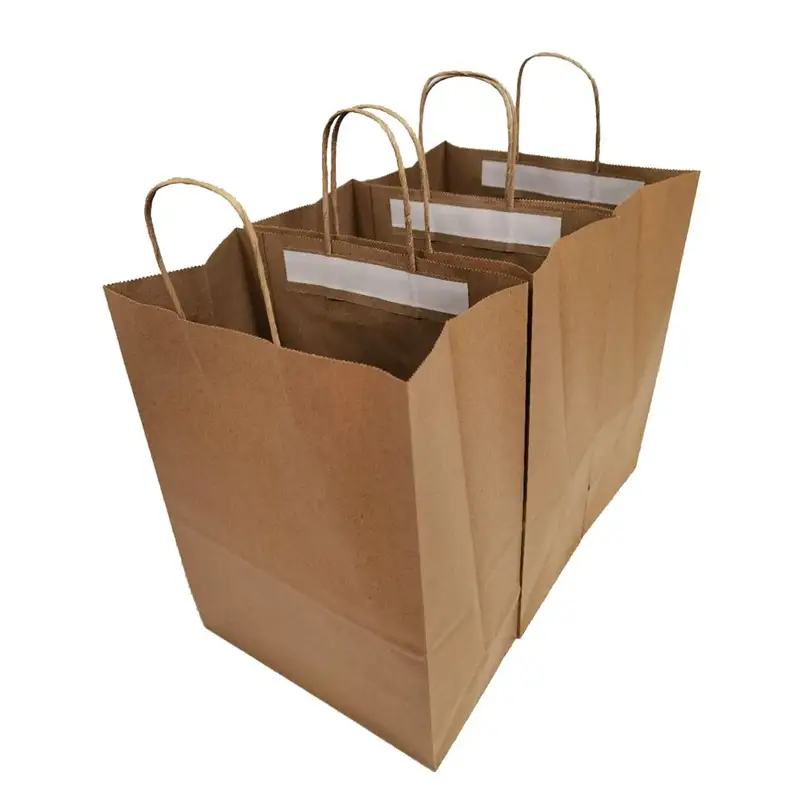
Grease-resistant paper bags bridge this gap. Engineered to block oil and moisture penetration, they remain fully biodegradable and recyclable. A thin glassine lining or specialized coating resists grease without relying on plastic. And now, regulatory changes are forcing the industry to rethink how that grease resistance is achieved.
Why This Matters Right Now
2026 is a turning point. The European Union’s Packaging and Packaging Waste Regulation (PPWR) entered into force on February 11, 2025, and becomes fully applicable on August 12, 2026. From that date, food-contact packaging placed on the EU market must comply with defined limits for PFAS content. In practice, this means packaging containing PFAS at or above specific thresholds cannot be sold in the EU, regardless of when it was manufactured.
The limits are precise: 25 parts per billion (ppb) for individual PFAS measured by targeted analysis (excluding polymeric PFAS), 250 ppb for the sum of all PFAS, and for PFAS containing polymers, total fluorine content must not exceed 50 ppm.
PFAS—per- and polyfluoroalkyl substances, sometimes called “forever chemicals”—have been widely used for decades to make paper grease-resistant, appearing in fast-food wrappers, pizza boxes, and Sacs de boulangerie avec fenêtre. Their persistence in the environment and potential health concerns have made them a target for regulators.
This shift matters even for businesses outside the EU. Major suppliers are removing PFAS from their entire portfolios globally, and the standard for “grease-resistant” is being redefined across the industry.
What Suppliers Are Doing
Lecta, a global paper manufacturer, has confirmed that its entire packaging portfolio—including its food packaging range—is now produced without added PFAS. The move establishes a company-wide global standard following an extensive review of formulations, rigorous raw material selection, and strengthened controls across the supply chain.
The commitment covers the company’s full packaging portfolio, including flexible and rigid packaging, self-adhesive materials, labels, and bags. Lecta has also introduced new no-PFAS-added grease-resistant papers across its Creaset, Metalvac, and Adestor ranges, developed as replacements for conventional greaseproof papers used in food and food-service applications. This initiative aligns with the EU’s PPWR, which places clear obligations on manufacturers to remove PFAS from formulations while meeting strict recyclability, chemical safety, and circularity standards.
Bio-Based Alternatives Are Advancing Rapidly
PFAS-free alternatives have arrived and are performing at levels comparable to conventional treatments. In March 2026, UPM Specialty Materials and Paramelt announced a jointly developed bio-based, paper-based food packaging concept that provides strong grease protection specifically for bakery, fast food, and convenience applications.
The solution combines UPM’s advanced barrier base papers (UPM Solide™ Lucent or UPM Prego™) with Paramelt’s bio-based heat-seal and barrier technology (Aquavate™ Bio SB 2383, a water-based coating formulated exclusively from biodegradable components). Together, these materials create a recyclable paper-based solution suitable for bakery, grab-and-go, and other dry or greasy goods.
Crucially, the components have been individually validated as home compostable, offering end-of-life pathways that don’t rely on industrial composting facilities. Achieving this level of grease resistance at low coat weights is technically challenging even with fossil-based coatings. As Christiane Laine, senior researcher at UPM Innovation, noted: “Achieving this level of grease resistance at such low coat weights is highly challenging even with fossil-based coatings, and the combined concept of our barrier base paper properties and Paramelt’s bio-based coating delivers exceptional performance.”
The coating integrates efficiently with existing packaging lines, such as VFFS (vertical form fill seal) lines. Leon Krings, business development manager at Paramelt, explained: “Brand owners and converters are seeking scalable technologies that integrate easily into current production setups. Aquavate™ Bio SB 2383 is a bio-based and biodegradable coating designed for reliable performance on standard coating processes and existing converting lines, enabling a practical shift toward recyclable, home compostable fiber-based solutions.”
What Consumers Actually Think
The consumer landscape for sustainable packaging has become more nuanced than headlines suggest. A McKinsey survey of 1,000 U.S. consumers conducted in March 2025 found that about a third consider environmental factors “very important” or “somewhat important” to their purchasing decisions. Price and quality rank higher, and their importance has increased since 2020. Recyclability is the most valued packaging sustainability trait, with 77 percent of respondents saying it is extremely or very important. Glass and paper are perceived as the most sustainable materials.
For cafes and bakeries, sustainable packaging can still be a competitive advantage, but it must deliver on practical performance first.
Market Growth: The Numbers Behind the Shift
The economic case for grease-resistant paper packaging is supported by market data. According to Mordor Intelligence, the global greaseproof paper packaging market stands at USD 1.78 billion in 2025 and is forecast to reach USD 2.33 billion by 2030, a compound annual growth rate of 5.53 percent.
By application, the greaseproof paper packaging market for the quick-service restaurant and take-away segment is projected to grow at 10.80 percent CAGR between 2025 and 2030—significantly faster than the overall market. By geography, Asia-Pacific captured 36.75 percent of the market share in 2024, making it the largest regional market.
Regulatory pressure is a key driver. PFAS-free compliance requirements are accelerating the replacement of conventional fluorochemical-treated papers.
What to Look for When Choosing Grease-Resistant Paper Bags
For cafe and bakery owners evaluating options, here are the practical considerations that matter.
- Coated vs. Laminated: Know the Difference. Laminated paper bonds a thin plastic layer to the paper, creating a strong barrier but making the bag non-biodegradable and difficult to recycle. Coated paper uses a water-based coating—often derived from natural materials like starch, wax, or plant-based polymers—that provides comparable protection without the plastic baggage. For businesses committed to zero waste, coated paper is the better choice.
- Food-Grade Safety Is Non-Negotiable. Food-contact paper must meet safety standards set by regulatory bodies like the FDA (in the US) or EU regulations, free from harmful chemicals that could leach into products. This includes not just the paper itself but also inks, dyes, and coatings used in printing and sealing.
- Breathability Matters for Bakery Goods. Freshly baked goods release moisture as they cool. If packaging traps that moisture, it condenses inside the bag and makes crusts soggy. The right grease-resistant paper bag balances oil protection with adequate airflow.
- Verify PFAS-Free Claims. Not all “grease-resistant” paper bags are PFAS-free. Request documentation from your supplier confirming that the coating materials are PFAS-free and meet applicable regulatory standards. Ask for third-party test results or certification documentation.
- Test Before Committing. Different products have different oil and moisture profiles. A bag that works for dry cookies may fail for a warm, buttery croissant. Test packaging alternatives with your specific products before making a full switch.
- Cost Considerations: Beyond Per-Unit Price. One common misconception is that sustainable packaging costs too much. The reality is more complex. Eco-friendly materials may still carry a premium, but the gap is narrowing as technology improves and production scales up. For cafes and bakeries producing in volume, the total cost equation also includes reduced waste, fewer bag failures, and the brand value of visible sustainability.
The Path Forward
For cafe and bakery operators, the priority is clear: verify PFAS-free compliance before August 2026, test alternative packaging with your specific products, and calculate total cost impact including reduced waste and customer retention. The regulatory deadline is fixed, but preparation time remains.
About Nanwang
Fujian Nanwang Environment Protection Sci-Tech Co., Ltd. (Stock Code: 301355) was established in 2010 and became the first listed company in China’s sac en papier écologique industry, listing on the Shenzhen Stock Exchange in June 2023. The company produces high-strength sac en papier kraft using water-based inks and water-based adhesives—materials that are completely biodegradable—and offers options including PFAS-free grease-resistant coatings. Nanwang has manufacturing facilities in Fujian, Shanghai, Guangdong, Anhui, Hebei, Hubei, Canada, and Indonesia, serving over 300 global brands across more than 200 countries and regions. The company has contributed to drafting multiple national and industry standards for paper packaging, including standards for paper cups, paper straws, and food contact materials.