








 FR
FR  EN
EN  ES
ES  PT
PT  RU
RU À l'intention des responsables des achats et des propriétaires de marques, sac en papier en vrac Les commandes suscitent un dilemme bien connu : les prix unitaires baissent à mesure que les volumes augmentent, mais s'engager sur des volumes importants avant d'avoir validé les performances en conditions réelles comporte un risque considérable.
L'objectif n'est pas de choisir entre le prix et la qualité, mais de structurer une commande de manière à ce que De meilleures spécifications permettent de réduire les taux de défaillance et Une gestion plus intelligente des achats permet de réduire le coût total de possession (TCO).
1. Définir la « qualité » à l'aide d'indicateurs de performance
La plupart des acheteurs pensent que plus le grammage (g/m²) est élevé, meilleure est la qualité du sac. Or, ce n'est pas seulement le poids qui détermine les performances, mais aussi la conception.
- Résistance à l'éclatement : Indispensable pour l'alimentation et le commerce de détail. A sac en papier de haute qualité Un sac conçu pour résister à une pression de rupture de 150 kPa offrira de meilleures performances qu'un sac en papier couché (GSM) plus lourd dont l'intégrité des fibres est médiocre.
- Fixation de la poignée : Les poignées en papier torsadé nécessitent des renforts adaptés à la charge prévue. Les fournisseurs spécialisés procèdent à des tests résistance à la traction de la poignée (mesurée en kg-force) afin de garantir que la poignée ne se détache pas avant que le papier ne cède.
- Tolérance à l'humidité : La résistance du papier peut diminuer de 20–30% en cas de forte humidité. Assurez-vous que votre fournisseur procède à Essais en conditions conformes à la norme ISO 187 (23 °C / 501 TP3T d'humidité) plutôt que de fournir des données de référence.
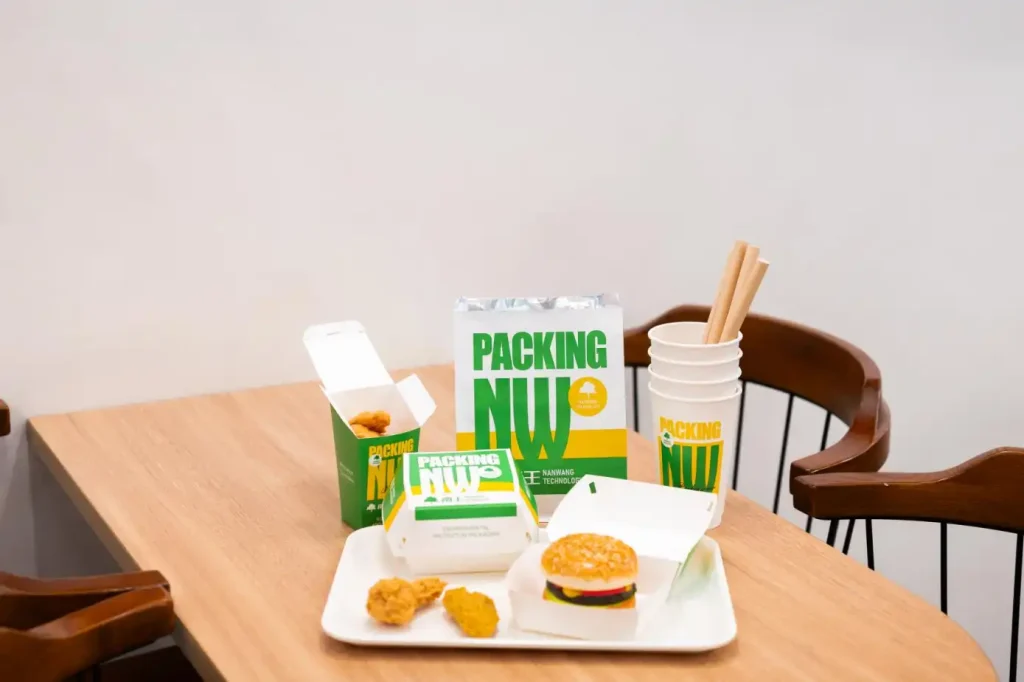
2. Choix stratégique des matériaux : vierges ou recyclés
Les matières premières représentent 60–70% du coût unitaire. Choisir la bonne qualité est le moyen le plus rapide de maîtriser les dépenses sans nuire à l'image de marque.
| Type de matériau | Meilleur cas d'utilisation | Incidence sur les coûts |
| Papier kraft vierge | Commerce de luxe, impression en couleurs vives | Premium |
| Kraft recyclé | Commerce en ligne, alimentation, usage fonctionnel | 15–25% Économies |
| Papier kraft non blanchi | Marquage durable, usage intensif | 30–40% Économies |
Conseil de pro : Utilisez du papier certifié FSC lorsque la réglementation du marché (comme REACH de l'UE) ou le positionnement de la marque l'exige. Pour les besoins purement fonctionnels de la logistique interne, le papier recyclé non blanchi offre le meilleur retour sur investissement.
3. Optimiser les méthodes d'impression en fonction du volume
Le choix d'une méthode d'impression inadaptée à la taille de votre lot est souvent à l'origine de coûts excessifs.
- Flexographie (Flexo) : Idéal pour Sac en papier en gros commandes de plus de 20 000 unités. Elle utilise des encres à base d'eau (à faible teneur en COV) et offre le coût unitaire le plus bas à grande échelle.
- Impression offset : Idéal pour les sacs de luxe destinés à la vente au détail, en quantités inférieures à 10 000 unités, qui exigent une précision des couleurs digne d'un magazine et des dégradés complexes.
- Impression numérique : Idéal pour échantillonnage et validation de la conception. Optez pour le numérique pour votre lot pilote avant d'investir dans des plaques flexographiques coûteuses.
4. Organiser stratégiquement les commandes en gros
Les tarifs de gros suivent une courbe de volume, mais les « commandes excessives » immobilisent des capitaux dans des stocks qui ne se vendent pas.
- La règle des six mois : Basez votre commande sur votre consommation réelle des six derniers mois, et non sur une « estimation » sur douze mois. Les coûts de stockage liés aux stocks excédentaires annulent souvent les économies unitaires réalisées grâce à un niveau de commande supérieur.
- Coût à l'arrivée vs FOB : Ne négociez jamais en vous basant uniquement sur le prix « franco à bord ». Calculez le Coût total de possession, y compris les frais d'expédition, les droits de douane, les frais d'entreposage et le coût lié au « taux de défaut ».
- Avantages de l'automatisation : L'approvisionnement auprès de pôles de fabrication hautement automatisés, tels que les usines à intégration verticale, peut permettre de faire baisser les prix en dessous de 1,02 € par sac pour les modèles basiques produits en grande série.
5. L'importance des partenaires intégrés verticalement
Il est plus facile de trouver le juste équilibre entre coût et qualité lorsque votre fournisseur maîtrise l'ensemble de la chaîne, de la transformation du papier à l'assemblage final.
Un excellent exemple est celui de Fujian Nanwang Environment Protection Sci-Tech Co., Ltd. (SZSE : 301355). En tant que leader dans le secteur des emballages écologiques, Nanwang tire parti :
- Présence mondiale : Des sites en Chine, en Asie du Sud-Est et en Amérique du Nord afin de réduire les coûts logistiques.
- Laboratoires internes : Tests rigoureux portant sur la résistance à l'éclatement, la résistance à la traction des poignées et la conformité aux normes d'absence de PFAS.
- Approfondissement en R&D : Avec plus de 1,47 milliard d'euros d'investissements annuels en R&D, l'entreprise s'assure de rester à la pointe de l'innovation en matière d'emballages durables.
6. Test pilote : l'étape « sans risque »
La commande la plus coûteuse est celle qui pose problème une fois entre les mains du client. Il faut toujours effectuer un lot pilote de 1 000 à 2 000 unités avant le lancement de la production à grande échelle.
- Essais sur le terrain : Utilisez ces sacs sur de véritables itinéraires de livraison.
- Validation en laboratoire : Mesurer la résistance à l'éclatement des flancs selon ISO 2758.
- Contrôle visuel : Assurez-vous que le repérage et la correspondance des couleurs respectent les directives relatives à l'identité visuelle de votre marque.
En résumé
Le compromis entre coût et qualité est souvent une illusion due à l'absence de spécifications mesurables. En définissant la qualité en termes de performances (résistance à l'éclatement, résistance à la traction), en adaptant les nuances de matériaux à des applications spécifiques et en nouant des partenariats avec des fabricants intégrés verticalement, vous pouvez préserver vos marges tout en valorisant votre marque. Contactez nous Pour plus d'informations.